

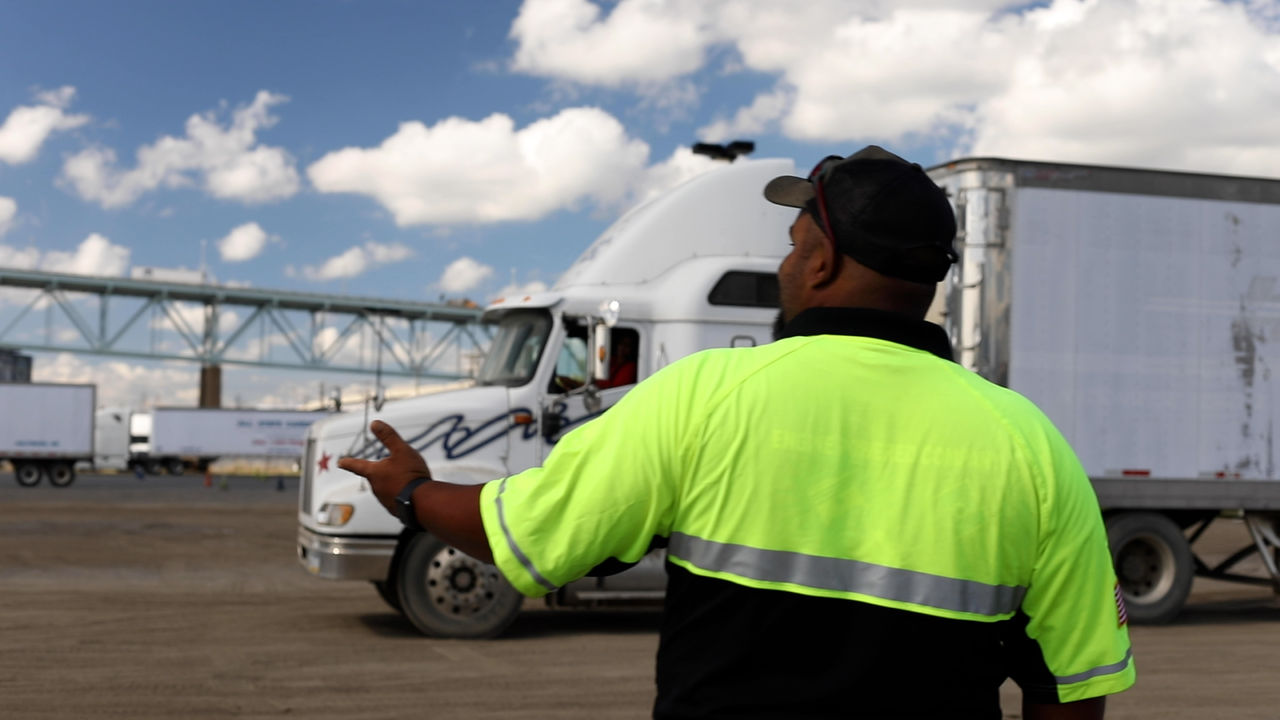
Commercial truck drivers are a critical piece of the economy and the supply chain, moving goods across the country and ensuring products are delivered safely and on time. If you’re looking for a hands-on, in-demand career, becoming a commercial truck driver can offer long-term stability and opportunity. With a commercial driver’s license (CDL), entry-level drivers can find work across industries like logistics, construction, retail distribution, and manufacturing.
What Is a CDL?
A commercial driver’s license (CDL) is required to operate large or specialized vehicles. The type of CDL you need depends on the vehicle you plan to drive:
- Class A CDL allows drivers to operate combination vehicles such as tractor-trailers
- Class B CDL applies to single, heavy vehicles like buses or dump trucks
- Class C CDL may be required for certain smaller commercial vehicles or passenger transport roles
To obtain a CDL, most new drivers must complete Entry-Level Driver Training (ELDT). This requirement also applies to those upgrading their license or adding endorsements such as passenger, school bus, or hazardous materials.
How to Get a CDL and Start a Truck Driving Career
Initially, candidates must satisfy basic qualifications such as being 21 years old, having a good driving record, and in many cases, holding a high school diploma or GED. Next, attending a quality truck driving school can be a crucial path to gain both theoretical knowledge and practical driving experience. Commercial driving programs vary in length, offering training on laws, regulations, and the hands-on operation of commercial vehicles.
After training, candidates must pass their state's commercial driver's license exam, which assesses their understanding of road laws and their driving skills. Following this, the Federal Motor Carrier Safety Administration (FMCSA) exam is required, testing knowledge of federal laws and physical fitness for driving.
Securing an starting job as an entry-level commercial driver is the next step. New hires often undergo orientation and training to familiarize themselves with their employers’ policies, routes, and procedures. The final hurdle is passing the company's road test, after which drivers are assigned a truck and route, marking the start of their career as a truck driver.
What You’ll Learn in CDL Training
The entry-level driver training (ELDT) curriculum equips new drivers with essential skills for a safe and successful career in truck driving. It includes topics on basic operation, safe operating procedures, advanced practices, understanding vehicle systems, and handling non-driving responsibilities.
ELDT's structure ensures drivers are well-prepared, focusing on both theoretical knowledge and practical skills. The theory portion covers critical safety and operational aspects, requiring an 80% minimum score for proficiency. Practical training encompasses vehicle inspection, maneuvering, and over-the-road instruction, emphasizing real-world driving scenarios, safe behavior, and compliance with hours-of-service regulations. Instructors assess behind-the-wheel performance, ensuring readiness for the challenges of truck driving.
This rigorous approach, validated by inclusion in the FMCSA's Training Provider Registry, underscores the program's commitment to safety and excellence in training. Upon successful completion, records are uploaded to the U.S. Department of Transportation's Training Provider Registry, formalizing certification.
3 Entry-Level Commercial Truck Driving Jobs
Exploring entry-level truck driving jobs reveals ample opportunities for newcomers looking to build experience in the trucking industry. The following positions can serve as a career foundation to advance from entry-level driver roles to more experienced roles driving commercial vehicles such as tractor trailers, tank vehicles, dump trucks, and more:
Delivery Truck Driver
Delivery truck drivers handle package transport and delivery within local regions. They typically use small trucks or vans from distribution centers for deliveries. These drivers generally operate commercial vehicles under 26,001 pounds, potentially qualifying for a Class C CDL. This role can serve as a stepping stone for those aspiring to obtain Class A or B CDLs and pursue higher-level commercial driving roles involving heavier vehicles.
Yard Hostler
Yard hostlers help maintain order and efficiency in cargo yards, preventing congestion. They use yard tractors to maneuver trailers within docks or truck yards. Since yard hostlers typically operate on private property and without having to travel outside the carrier’s premises, a CDL may not be required. But knowing basic trailer maneuvering is essential, a skill that can be acquired through entry-level driver training.
Carriers may hire yard hostlers with little to no commercial driving experience, including those working toward or who have recently obtained a Class A or Class B CDL. It’s important to note that not all companies, however, may hire without a CDL.
Bus Driver
Bus drivers shuttle individuals to locations like schools, workplaces, and malls, even crossing state and national lines. Their duties encompass picking up and dropping off passengers at set places, adhering to a timed route, assisting all passengers including those with disabilities, complying with traffic and transit laws, maintaining passenger safety, communicating delays, conducting basic bus maintenance, and ensuring the vehicle's cleanliness. This profession includes school, local transit, intercity, and charter bus drivers, each requiring adherence to specific regulations.
CDL requirements vary depending on the size of the bus. For any bus operator carrying 16 or more passengers or driving a bus over 26,001 pounds, a CDL of the appropriate class with additional endorsements for passenger vehicles (P) and school buses (S) is typically required. A CDL is required even when driving an empty bus over 26,001 pounds on public roads.
Truck Driving Job Outlook
According to the American Trucking Associations (ATA), 3.58 million truck drivers were employed in 2024, with trucks having moved roughly 72.7% of the nation’s freight by weight. A career in commercial truck driving can offer flexibility, independence, and opportunities for advancement. While the job may involve long hours, proper training like the CDL training program at All-State Career helps drivers develop the skills needed to enter this workforce safely and confidently.
Start Your CDL Training at All-State Career
If you’re ready to take the first step, the commercial truck driving training program at All-State Career is designed to help you build the skills and knowledge needed to enter the field. Students receive hands-on training, preparation for CDL testing, and real-world driving experience to help them feel confident behind the wheel.
Explore CDL training opportunities at All-State Career campuses at these locations:
Commercial truck driving offers a clear path into a stable, essential industry. With the right training and a CDL, you can pursue entry-level opportunities and continue building your skills over time.